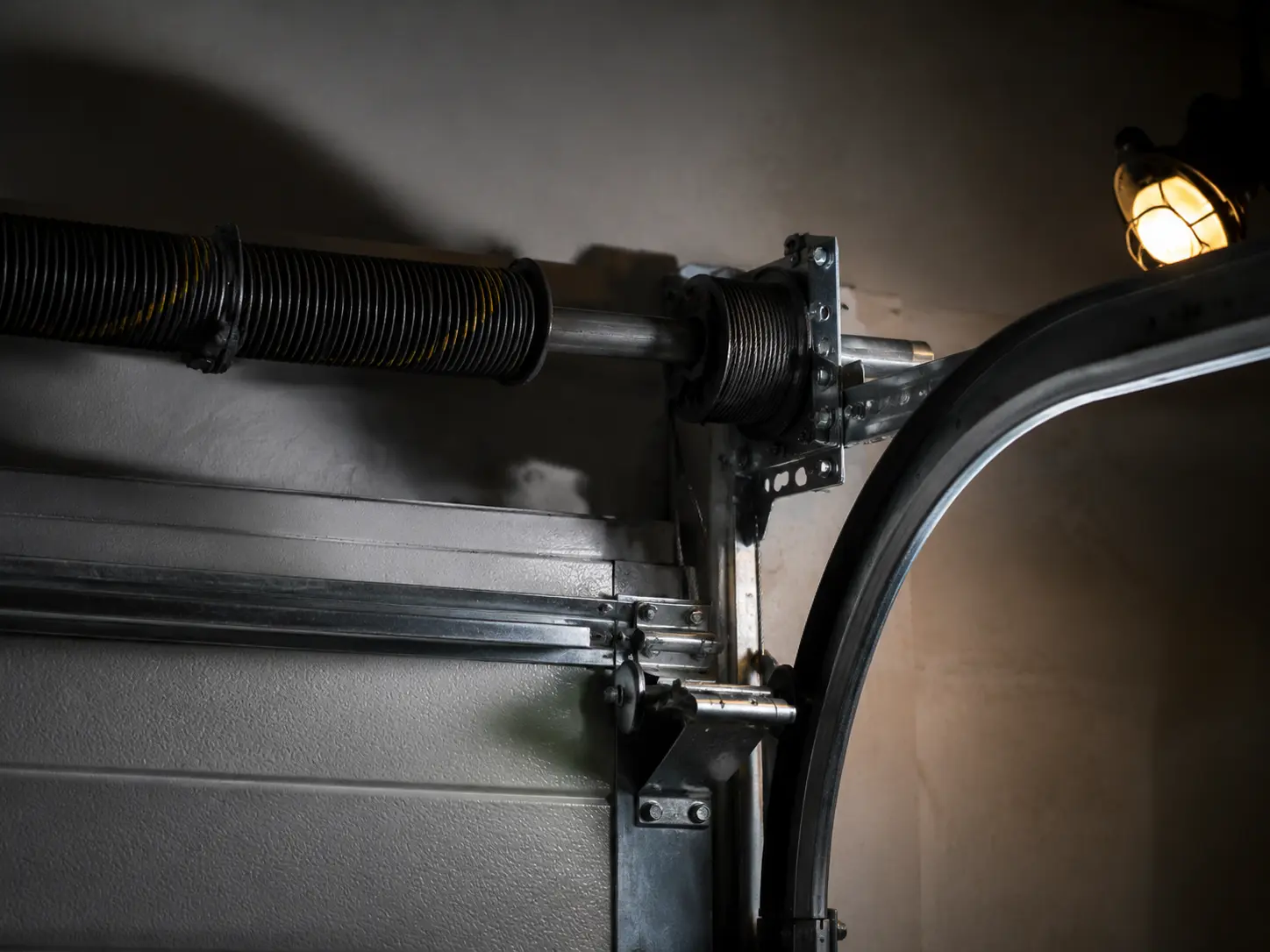
A closing door may reverse because the safety system detects an obstruction, because the photo eyes cannot communicate, or because the opener senses abnormal resistance before reaching the floor.
Watch where the reversal begins
A door that refuses to leave the fully open position suggests a different path from one that travels almost to the floor and then returns. Note the exact point, whether the opener lights blink, and whether the same behavior occurs every time.
If the door reverses as soon as the beam area is crossed, inspect the opening for people, vehicles, stored objects and debris. Never treat a safety reversal as an inconvenience to be bypassed.
Check the photo-eye path
The small sensors near the floor must face each other across the opening. A moved bracket, dirty lens, loose low-voltage wire or vibration can interrupt that path. Indicator lights may be dark, blinking or inconsistent, depending on the opener model.
Clean only the exposed lens gently and remove obvious objects from the beam. Do not tape the sensors together, relocate them above the required position or hold them permanently out of the door's path.
The door itself may be resisting
A bent track, damaged roller, stiff hinge, cable problem or debris in the travel path can make the opener interpret normal closing as an obstruction. If the reversal happens at the same physical point, look for a repeatable bind rather than assuming the sensors are defective.
Travel limits can also make an opener think the door has reached the floor too early or too late. Settings vary by manufacturer and model, so random force or limit adjustments can hide a mechanical problem and reduce the effectiveness of the safety system.
Test safety according to the manufacturer
The U.S. Consumer Product Safety Commission advises owners to test an automatic opener's reversing feature regularly and have the system adjusted or inspected if it fails to reverse correctly. Use the procedure in the opener's own manual because test instructions differ by model.
Safety reference
This guide also reflects consumer-safety guidance published by U.S. Consumer Product Safety Commission: automatic garage-door opener safety.