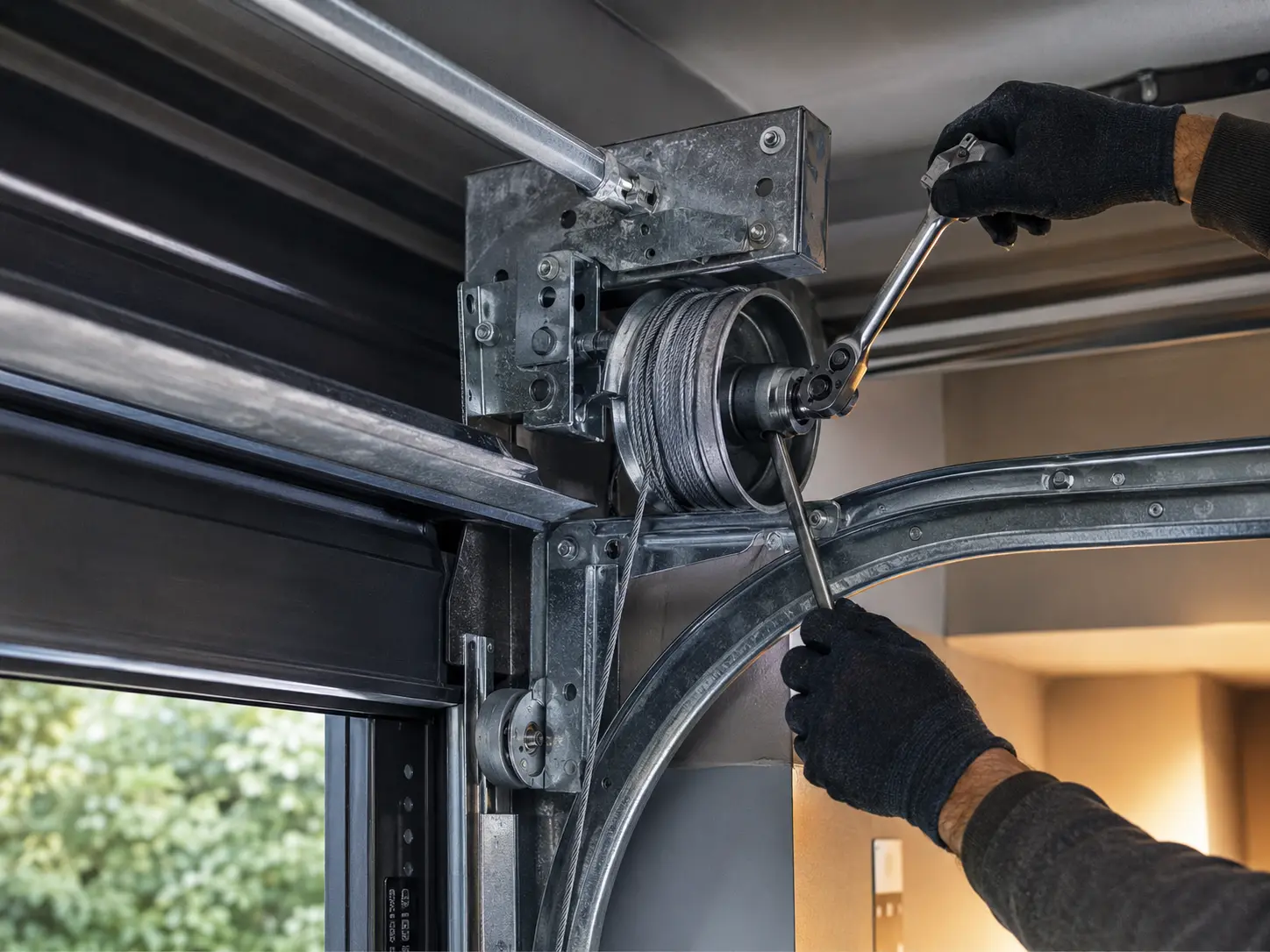
A cable rarely leaves its drum without a reason. Uneven spring tension, an obstruction, a slack condition, damaged travel hardware or a door that is no longer square can all shift the cable out of its normal path.
What the cable and drum do
Lift cables connect the lower corners of the door to drums on the torsion shaft or to the extension-spring system. As the shaft turns, both sides must wind and unwind evenly. If one cable loses tension or stacks incorrectly, one side of the door can lead the other.
Visible signs include cable hanging beside the track, loose loops near the drum, frayed strands, a tilted bottom section or a door that jams after moving only a short distance.
Common reasons a cable loses its path
A broken spring can remove the tension that keeps the cable seated. A door closing onto an object can create slack on one side. Worn rollers, a bent track or loose mounting hardware can let the door travel out of square. Corrosion or fraying can also change how a cable winds.
The visible cable is therefore not always the original failure. Rewrapping it without correcting the spring, track, roller or alignment problem can lead to another release.
Why this is not a pull-and-reset job
The bottom brackets and drums are load-bearing components connected to spring tension. A door that is crooked may also be supported unevenly. Pulling the emergency release, loosening a drum or removing a bottom fixture can allow sudden movement.
Keep the opening clear and do not force the opener. The door should be secured before the cable, drum, spring balance and travel hardware are inspected.
What a complete diagnosis checks
The inspection should cover both cables, both drums, spring condition, shaft and bearings, bottom fixtures, rollers, tracks and the door's alignment. After the fault is corrected, equal cable tension and smooth travel must be verified through the door's full safe range.