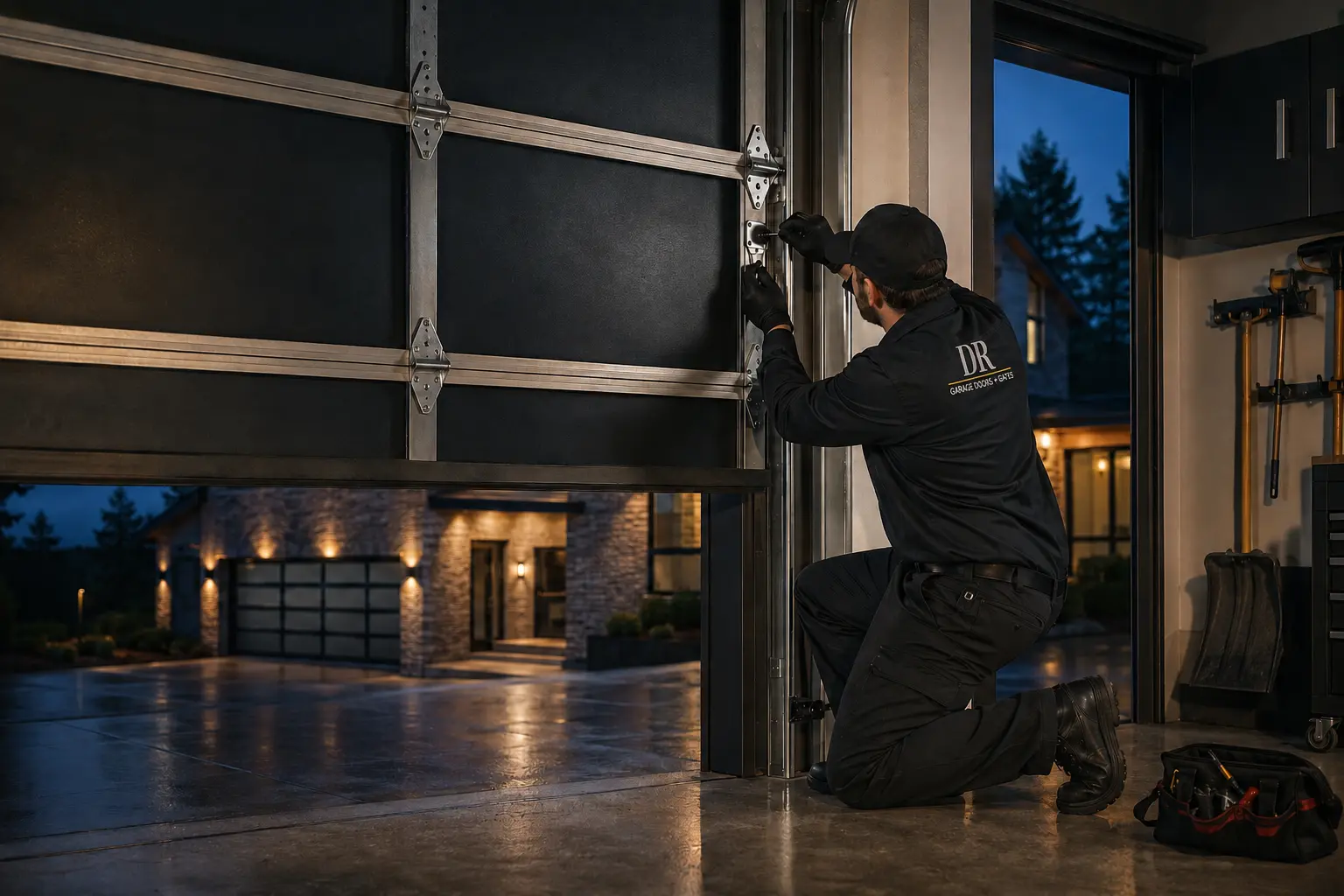
If the door is stuck open, hanging crooked, off its track or blocking a vehicle, secure the area first. Do not keep pressing the opener. Emergency availability is confirmed by ZIP code, route and the condition of the door.
What this symptom can look like
- The door is hanging unevenly or a roller has left the track
- A lift cable is loose, tangled or visibly broken
- A spring has a visible gap or the door suddenly feels extremely heavy
- The door will not close and the property cannot be secured
- The opener strains, hums or jerks while the door barely moves
These observations help describe the problem, but they are not a remote diagnosis. Different failures can produce similar movement, sound or control behavior.
Why it happens
Urgent calls often involve more than one system. A broken spring can overload an opener; a cable problem can pull the door crooked; a bent track can force a roller out. The safest diagnosis checks the whole travel and counterbalance system instead of replacing the first visible part.
A complete diagnosis should follow the symptom through the connected system. Replacing one part without checking the load, travel and related hardware can miss the reason it failed.
What to do now
Keep people, pets and vehicles clear. Photograph the full opening, both tracks, spring area and opener rail from a safe distance. Note the ZIP code, whether the door is open or closed, and whether it is level. If the door is stationary and power can be reached without standing beneath it, stop further opener use.
What not to do
Do not pull the emergency release on a raised, crooked or unsupported door. Do not loosen bottom brackets, drums, cables or springs. Do not force the door by hand or clamp a damaged track back into position.
What a clear repair process should include
The first goal is to identify whether the door can be stabilized and secured. A repair visit should distinguish spring, cable, track, roller and opener faults, explain the proposed scope before added work, and confirm what can be safely tested after repair.
Before work begins, ask what failed, which work is required now, which work is optional, what the total authorized scope includes and what written record you will receive. If conditions change after inspection, added work should be explained before it is performed.
Photos and details that help
| Send or describe | Why it matters |
|---|---|
| Full door from straight ahead | Shows position, level, size and panel alignment |
| Both tracks and cable paths | Shows uneven travel and visible displacement |
| Spring area and opener label | Helps identify system arrangement |
| ZIP code and access notes | Confirms coverage, route and scheduling limits |
| The first sound or movement | Preserves the sequence before repeated attempts changed it |
Related help
Service coverage
DR Garage Doors & Gates provides repair service for existing residential garage-door systems, openers and selected residential gates in New York City, Long Island and New Jersey. Commercial work is reviewed by system and location. Availability is confirmed by ZIP code. Complete new-door and new-gate sales are not represented.