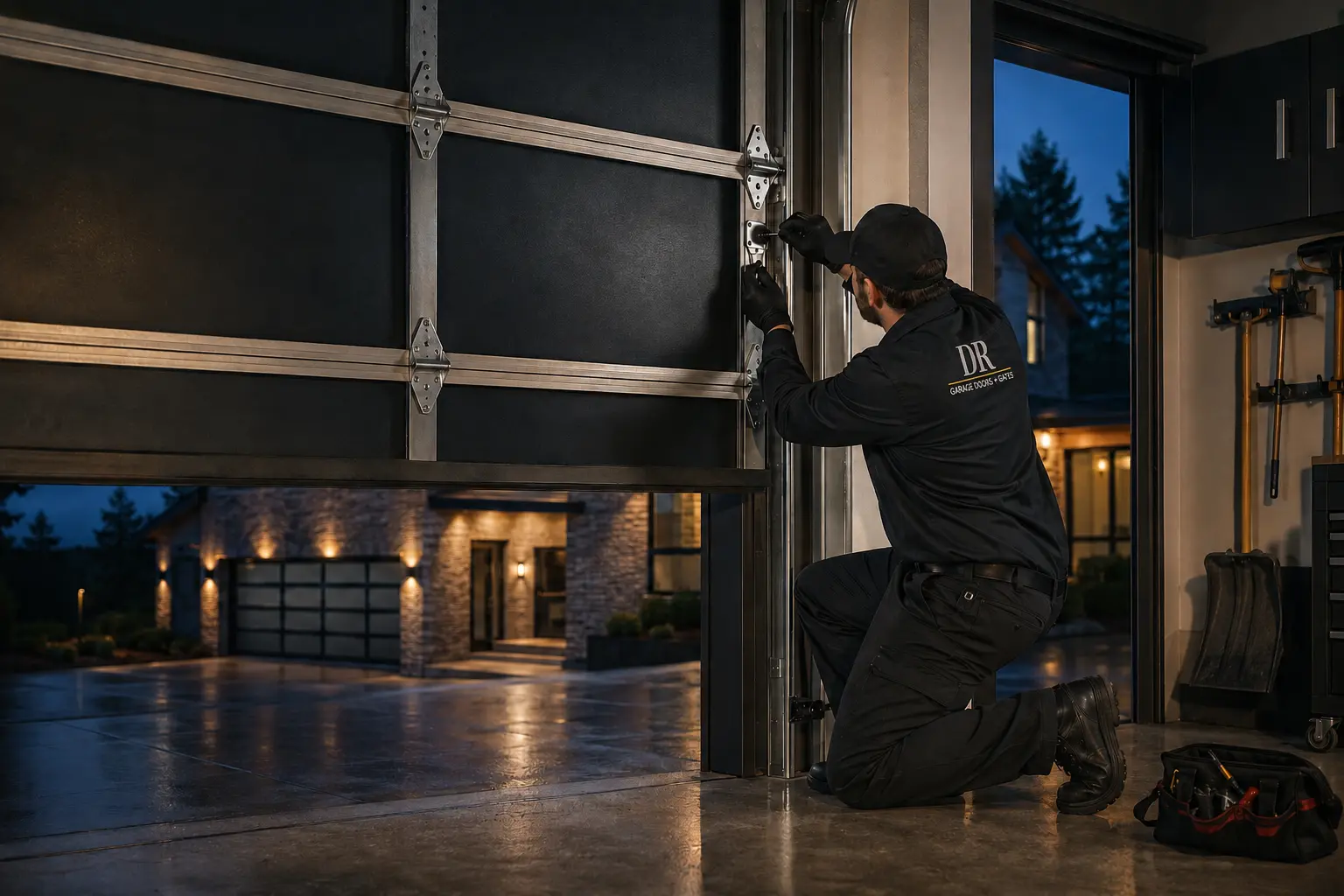
Maintenance is most useful before the door becomes noisy, uneven or unreliable. A tune-up should inspect movement and safety as a connected system—not simply spray lubricant and leave.
What this symptom can look like
- New squealing, grinding, popping or scraping sounds
- Jerky travel or hesitation at the same point
- Frayed cable strands, loose hardware or worn rollers
- The door no longer stays balanced during a professional balance test
- Safety reversal or photo-eye behavior is inconsistent
These observations help describe the problem, but they are not a remote diagnosis. Different failures can produce similar movement, sound or control behavior.
Why it happens
Normal cycles loosen fasteners and wear rollers, hinges and bearings. Weather and debris affect tracks and seals. Small alignment or balance changes make the opener work harder, so maintenance should pay attention to both the door and operator.
A complete diagnosis should follow the symptom through the connected system. Replacing one part without checking the load, travel and related hardware can miss the reason it failed.
What to do now
Watch one complete cycle from a safe position and write down any repeatable sound or hesitation. Clean the floor area and sensor lenses gently. Keep service history, model information and prior invoices available.
What not to do
Do not adjust spring tension, cable drums, bottom brackets or high-tension hardware. Do not coat tracks with heavy grease or keep cycling a door that is crooked, unusually heavy or leaving the track.
What a clear repair process should include
A useful tune-up checks visible hardware, rollers, hinges, tracks, cable condition, balance-related symptoms, opener connection, travel and safety controls. Any repair recommendation should identify the symptom and affected part rather than rely on a vague package.
Before work begins, ask what failed, which work is required now, which work is optional, what the total authorized scope includes and what written record you will receive. If conditions change after inspection, added work should be explained before it is performed.
Photos and details that help
| Send or describe | Why it matters |
|---|---|
| Full door from straight ahead | Shows position, level, size and panel alignment |
| Both tracks and cable paths | Shows uneven travel and visible displacement |
| Spring area and opener label | Helps identify system arrangement |
| ZIP code and access notes | Confirms coverage, route and scheduling limits |
| The first sound or movement | Preserves the sequence before repeated attempts changed it |
Related help
Service coverage
DR Garage Doors & Gates provides repair service for existing residential garage-door systems, openers and selected residential gates in New York City, Long Island and New Jersey. Commercial work is reviewed by system and location. Availability is confirmed by ZIP code. Complete new-door and new-gate sales are not represented.